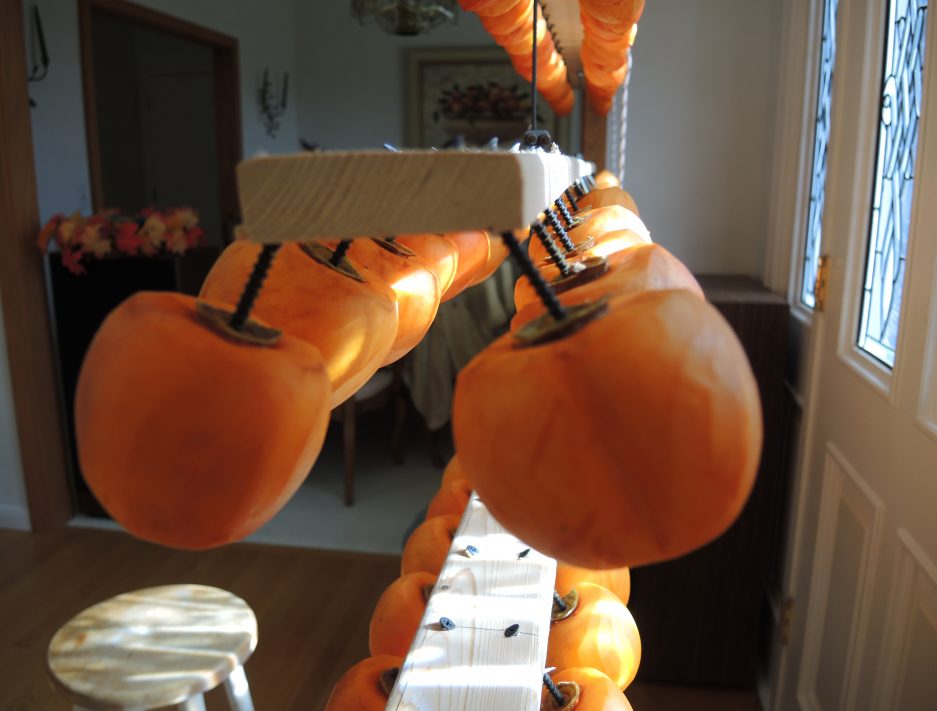
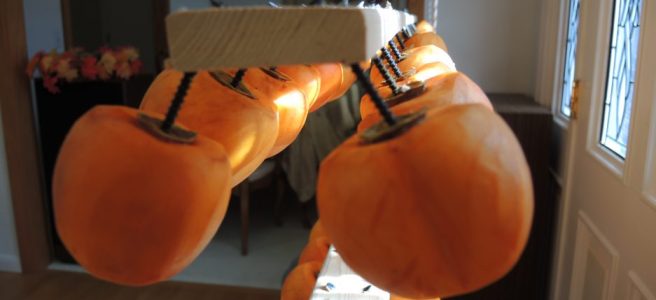
I’ve been learning how to dry persimmons the Asian way (I’ve read China, Korea and Japan all have history with this), but chose the Japanese words because they’re used in California due to immigrant populations’ influence, but also because I have some close friends from Japan and have taken language lessons when I was working and visiting Japan.
Hoshigaki results from pealing then hanging the whole fruit which allows sugars to continue to be produced over the course of the weeks-long process (few fruits continue to sweeten after being picked, most just soften). And this results in an amazingly sweet final product which could easily be confused with something that had been artificially sweetened.
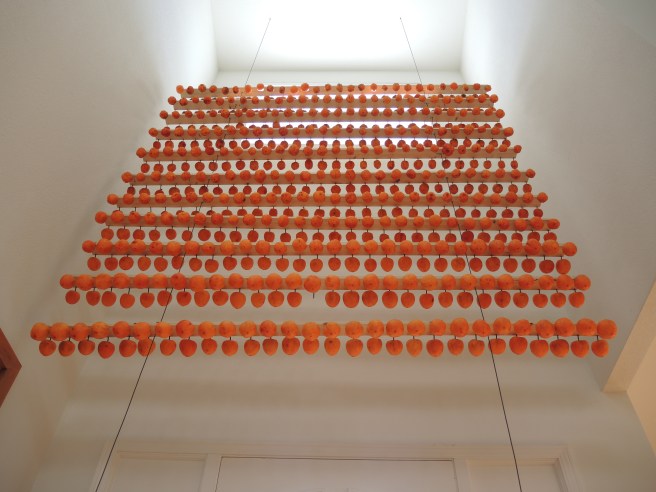
Part of what drove me to jump into this project with both feet (ultimately hanging 672 pieces) without the foreknowledge of what the final product would even taste like (I’ve only enjoyed fresh persimmons (kaki) before this year), is that the fruit became available to me at very lows prices (I’ve bought from three different homeowners who priced them as low as 10 cents each). And because I didn’t use a fan on the first row of 56 I pealed and hung, several of them got moldy and/or started to ferment. So early on I was faced with throwing some away but I decided to cut off the bad parts and taste it anyway, and to my amazement, they were even better than when fresh (even though they were still very soft and gushy inside. So that convinced me to keep going, plank of 56, after plank, finally stopping when I hit 12 planks and became worried about the weight on the ceiling joists of my house.
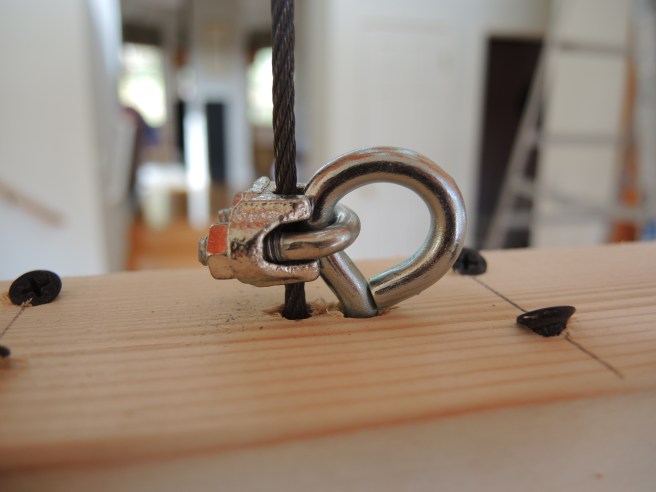
Below is a picture of how I attached the planks to the cables. This way I can adjust the height (and level) of the planks on the supports.
Below, one perfect one moldy, only after about a week after pealing and hanging. I’ve found in the worst cases the mold is growing on an area that is fermenting underneath and the fruit is doomed (although I have excised the bad parts and eaten the rest and thought it was pretty good). On other ones the mold isn’t a sign of fermenting underneath, and in that case much less fruit was ruined and only a little needed to be excised before eating.


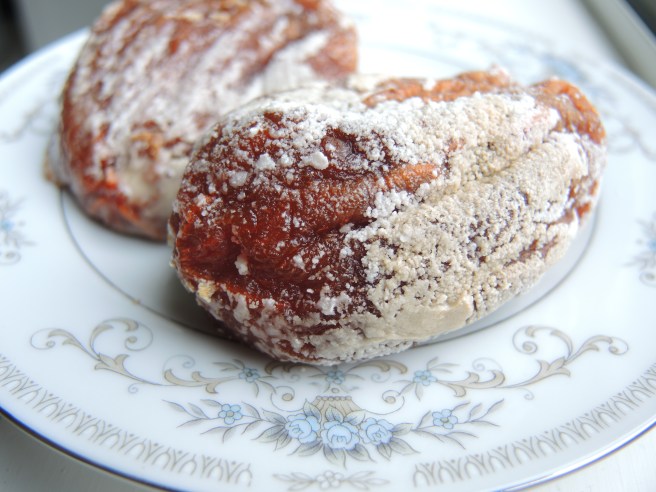
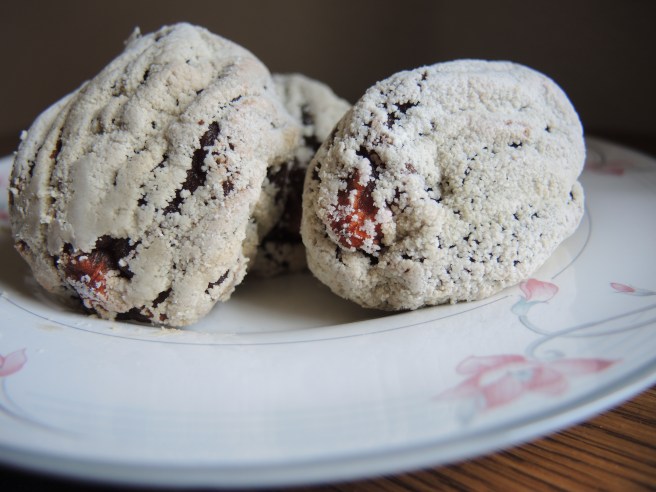
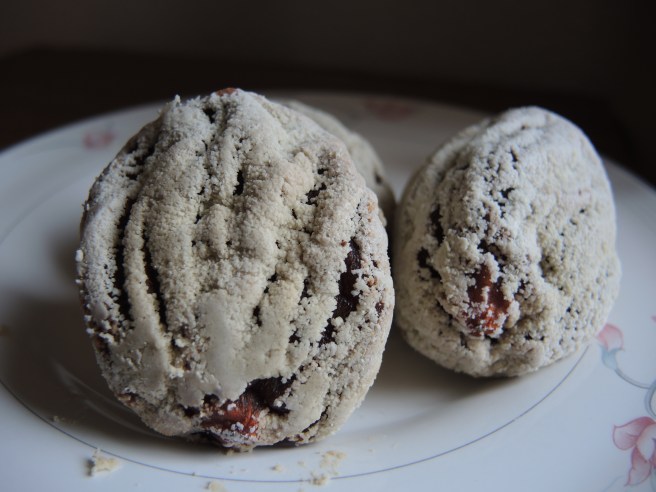
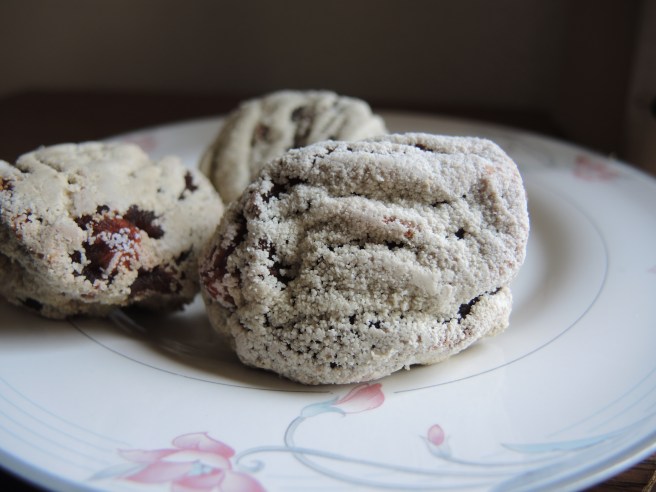
I discovered something to contend with as I added fruit over a period of weeks which resulted in quite a range of how dry some pieces were compared to others. And then as Christmas was nearing (and I was expecting visitors to my house), I somewhat rashly, bagged all the fruit at once. The resulting variation in moisture ranged from a sticky and wet (gooey) texture feeling in the mouth, to dry and gummy (chewy). I like the gooey ones but they have to be kept in the freezer to look like the picture below or the white powder turns into a brown syrupy coating, too scary looking to eat.
 My Adventure Drying Persimmons